The ISO 20022 Paradox: Why Message Migration Is the Easy Part
The payments industry declared victory on ISO 20022 adoption. But format compliance without data readiness is a pattern I’ve watched repeat for 30 years—and it always ends the same way.

Last year, I sat across from the CTO of a major European clearing bank. His team had just completed their ISO 20022 migration—on time, on budget, technically flawless. Messages were flowing. He was, understandably, proud.
Then I asked a simple question: "What percentage of your cross-border payments still require manual intervention because of address data?"
He paused. The answer came back: roughly one in five.
His XML was perfect. His data was not.
I’ve seen this pattern four times across 30 years in financial services technology. A major migration is announced. Institutions invest heavily in format compliance—new schemas, upgraded interfaces, connectivity tests passed. And the harder question—whether the underlying data is actually ready—gets deferred until it becomes a crisis.
We’re in that cycle again. And the clock is ticking.
The Data Quality Reckoning
Let’s acknowledge what the industry has accomplished. The ISO 20022 migration is well advanced. Over 3.9 million CBPR+ messages flow daily on the new rails. By any technical measure, format adoption has been a success.
But SWIFT’s translation services came with a hidden cost: they allowed institutions to carry old data habits into new message structures and call it progress. The Payment Market Practice Group confirmed what I’ve been seeing on the ground—recurring data quality issues across the ecosystem: misuse of address fields, incorrect population of mandatory elements, duplication of town and country values, and over-reliance on downstream parties to fix what should have been corrected at source.
The Cost of Poor Data
These aren’t new problems. What’s new is that we’re running out of runway to ignore them.
November 2026: Hard Stop, Not Soft Suggestion
The approaching deadlines aren’t guidance. They’re enforcement.
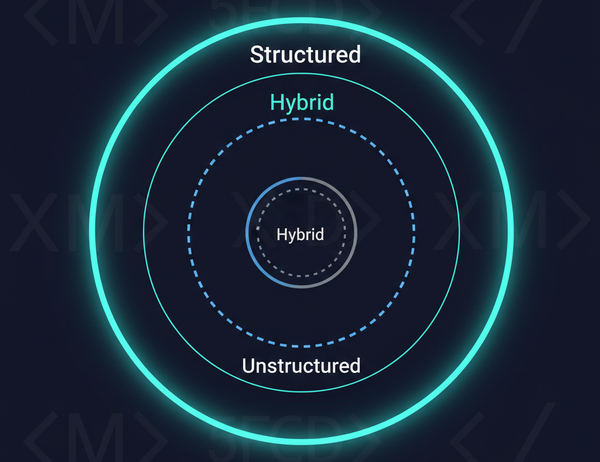
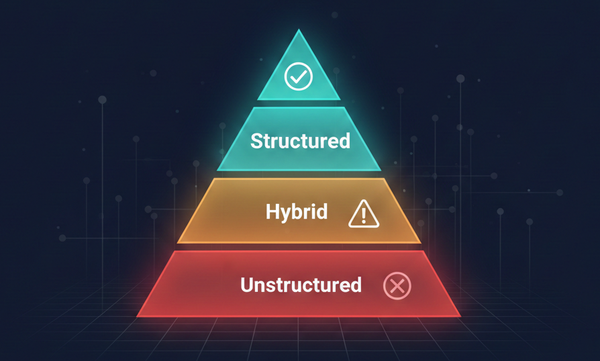
The European Payments Council has been explicit: after 22 November 2026, unstructured addresses will no longer be allowed in SEPA payment messages. Payments that don’t comply will be rejected. SWIFT has made a parallel commitment for CBPR+—starting November 2026, only structured or hybrid formats will pass, with Town and Country as mandatory minimums.
What makes these deadlines different is the enforcement mechanism. During coexistence, validation was deliberately soft. That grace period is ending. Messages that “passed” in 2024 will fail in 2026.
I’ve watched this before. In every previous cycle—SEPA IBAN adoption, real-time payment go-lives, original SWIFT messaging standards—the institutions that distinguished between technical compliance and genuine data readiness emerged stronger. They processed faster. They screened more accurately. The difference was never the technology. It was the data discipline.
Why This Problem Is Harder Than It Looks
Understanding why unstructured address data persists requires looking at where addresses actually come from. Address capture happens at initiation—in customer onboarding systems, corporate ERP platforms, and client-facing portals. By the time an address reaches the payments engine, it’s already downstream of the original data creation.
This creates a structural misalignment. The entity with the strongest incentive to fix address quality—the correspondent processing the payment—often lacks the ability to do so. The entity with the ability to fix it—the originating institution—often lacks visibility into downstream impact.
The Hybrid Trap
Many institutions have treated hybrid addresses as a permanent solution rather than a transitional measure. While helpful in the short term, treating hybrid as a long-term strategy creates compounding problems:
- The Validation Gap: Network validation isn’t universally enforced. An address that clears one infrastructure may reject at the next.
- The Discipline Problem: Banks are seeing recurring violations—extra address lines, mandatory elements missing, or country codes duplicated across fields.
- The Opportunity Cost: Every hybrid payment represents unrealised automation potential. The screening precision and investigation speed of structured data remain locked away.
Why Generic Approaches Fail
The complexity of address structuring becomes apparent through three scenarios I’ve encountered in practice. These aren't edge cases; they are categories of failure.
The Frankfurt Payment
The Paris Problem
The Bombay Archive
These scenarios illustrate why regex-based parsing and generic LLMs systematically underperform. Payment address structuring is a complex NLP challenge requiring financial identifier preservation and geographic disambiguation across 195 countries.
The Technology to Solve This Already Exists
Here’s where the conversation needs to shift. The industry has spent years framing structured address conversion as an unsolved problem. That framing is now outdated.
Purpose-built address resolution technology is in production today. Not in pilot. In production, at scale.
The operational evidence changes the calculus. Institutions using production-grade address resolution report:
- STP rates exceeding 98% (compared to 40–60% with unstructured data).
- Reductions in false positives of 30–70%.
- Exception handling costs dropping from $25 per case to under $5.
The constraint is no longer technical capability—it’s institutional decision-making speed.
Five Principles for Getting This Right
Based on the industry trajectory and operational evidence, here is my recommendation for institutions navigating this transition.
- Validate early, not at the network boundary. Treat address validation like sanctions screening: if it’s not valid, it shouldn’t go out.
- Treat hybrid as an engineered fallback. It should only be used under defined conditions (upstream capture constraints), not as a default setting.
- Remediate customer masters as a data programme. The address problem is primarily a data store problem, not an XML problem.
- Quantify the value. Connect improvements to measurable outcomes like STP rates, reject rates, and investigation mean time to resolution.
- Front-load quality. The cost of catching errors before transmission is a fraction of the cost of repairs, returns, and customer complaints after.
The Choice That Defines Competitive Position
Here’s what 30 years has taught me: the gap between stated ambition and actual implementation is where competitive advantage lives.
Institutions that treat structured addresses as a compliance checkbox will stabilise at minimum viable compliance. Institutions that treat them as shared data infrastructure will compound benefits across automation, analytics, and customer experience.
Structured by default. Hybrid as fallback. Unstructured eliminated.
The deadline is approaching. The technology to meet it is available now. The question for every institution is straightforward: Is your address data fit for automation?
Parth writes about the intersection of AI, payments compliance, and data intelligence. With 30 years in financial services technology, he focuses on the implementation details that separate compliant institutions from those still chasing deadlines. About ioNova →